
As a millennial, I grew up with the Harry Potter series and its beloved characters. I transitioned from reading of Harry, Ron, and Hermione’s adventures in the comfort of my childhood bedroom to reading the stories to my own children as they grew. I always found the wizarding world inspirational; selflessness, friendship, courage, and determination were the cornerstones of each character’s individual journey.
While as readers, we already think we know the Harry Potter character’s inside out, I though it would be fun to look at their personalities through the lens of the Myers-Briggs Type Indicator® (MBTI). So let’s take a look at the personality types of our favorite Hogwarts heroes and villains!
Not sure what your personality type is? Take our new personality questionnaire here. Or you can take the official MBTI® here.
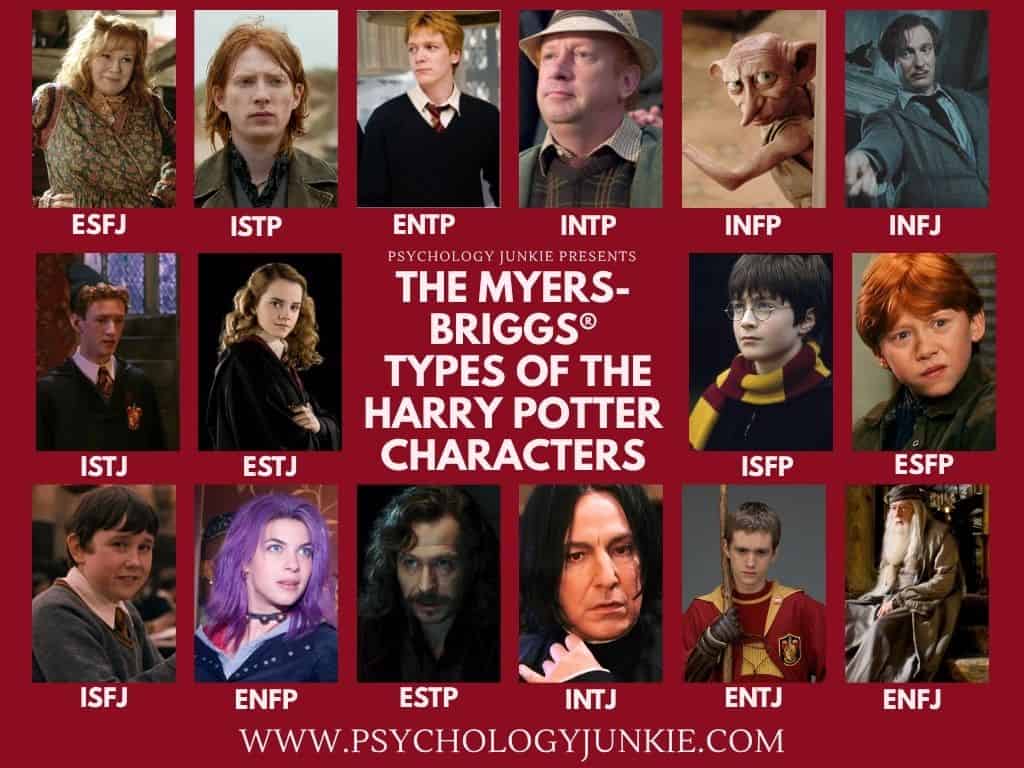
The Myers-Briggs® Personality Types of the Harry Potter Characters
Albus Dumbledore – ENFJ
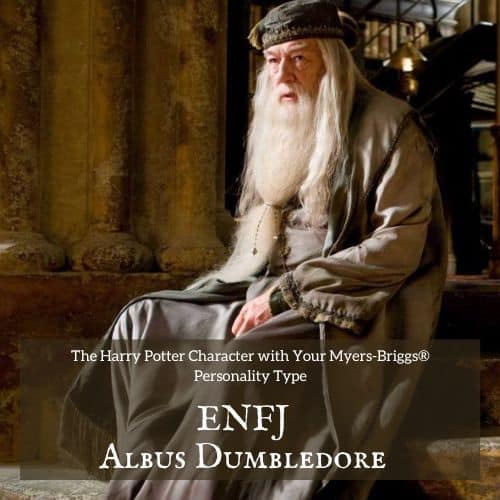
I have mixed feelings about Dumbledore. I admire his insight, his willingness to give people second chances, and his ability to see possibilities that others miss. But when he starts treating Harry as part of a much larger plan, I feel angry. There is an actual child standing in front of you, Albus. Could we attend to him for a minute?
His decision to distance himself from Harry is particularly frustrating. I understand his reasoning. I also understand why Harry, who has already experienced plenty of neglect, finds it devastating.
Dumbledore understands people and knows how to inspire them, while his Introverted Intuition keeps him focused on where events are heading. He can see a future worth sacrificing for. The uncomfortable question is who gets to decide what everyone else should sacrifice.
At his best, he helps people recognize strengths they haven’t seen in themselves. At his most troubling, his confidence in the big picture gets ahead of his responsibility to the person who needs him now.
Find out more about ENFJs: 24 Signs That You’re an ENFJ, the Mentor Personality Type
Minerva McGonagall – ESTJ
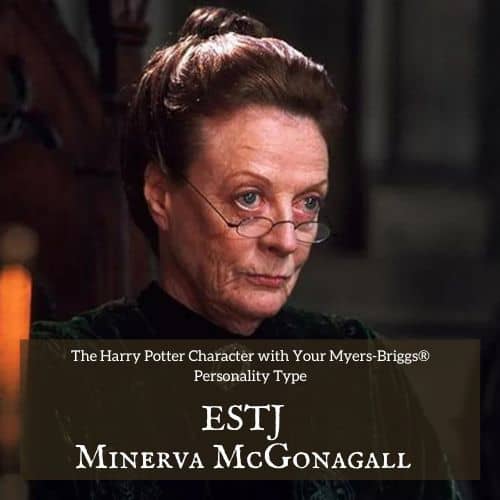
McGonagall is the sort of teacher who would intimidate me into finishing my homework and then become one of my favorite people. You know where you stand with her. Do the work, treat people the correct way, and don’t expect a moving speech to excuse your complete lack of preparation.
I profile her as an ESTJ because she’s no-nonsense, pragmatic, and decisive. She believes in following the rules and has no problem doling out criticism, especially if she cares about someone. Her Extraverted Thinking shows in how readily she takes charge; her Introverted Sensing gives weight to experience and established methods. But she also has plenty of room for affection, humor, and the occasional bending of a rule. This is the woman who sees Harry fly and promptly recruits him for Quidditch.
Discover more about ESTJs: A Look at the ESTJ Leader
Rubeus Hagrid – ISFP
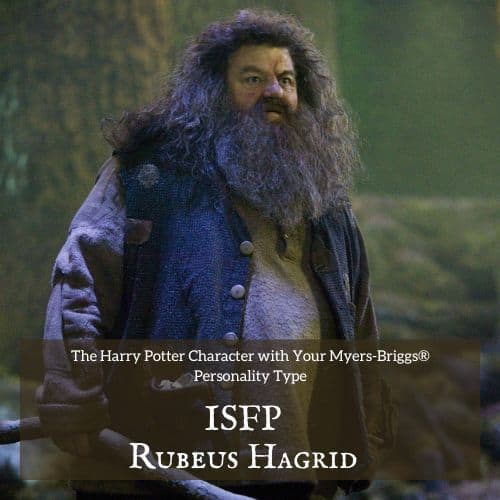
The gentle giant of the group, Hagrid has a soft spot for any misunderstood creature who crosses his path. Like most ISFPs, Hagrid is deeply attuned to the world around him – to nature, animals, and opportunities. Kind and sensitive, he is a creature of his feelings and emotions. He is fiercely loyal to those he loves, even at risk of his own safety. While he may not understand why certain rules need to be followed, Hagrid follows through with any task Dumbledore or Professor McGonagall assigns him out of loyalty and respect for the two elder teachers. He has a special knack for understanding creatures and empathizing with them. He always gives everyone the benefit of the doubt, even those who have done him wrong in the past.
Discover more about ISFPs: 10 Amazing ISFP Anime Characters
Remus Lupin – INFJ
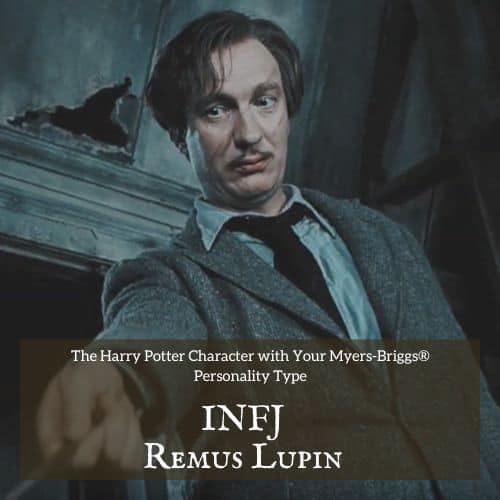
Lupin is the teacher so many of us wish we’d had. Someone who notices that you’re struggling without making your struggle the afternoon’s entertainment.
As an example, remember how he handles Neville in the boggart lesson. He gives him a chance to succeed, helps him turn something frightening into something ridiculous, and lets him experience being capable in front of his classmates. For a child accustomed to feeling inadequate, that was significant.
I read Lupin as an INFJ because he pays attention to what’s happening beneath someone’s behavior, then adjusts his approach to help them. With Harry, he offers patient, practical instruction rather than expecting courage to appear on command. He understands that fear needs somewhere to go.
He has his own difficulties, though. His shame about being a werewolf can lead him to decide that other people would be better off without him, even when they very much want him there. That makes him more human to me. He can offer someone else understanding and still struggle to extend it to himself.
Find out more about INFJs: 7 Things That INFJs Experience As Children
Sirius Black – ESTP
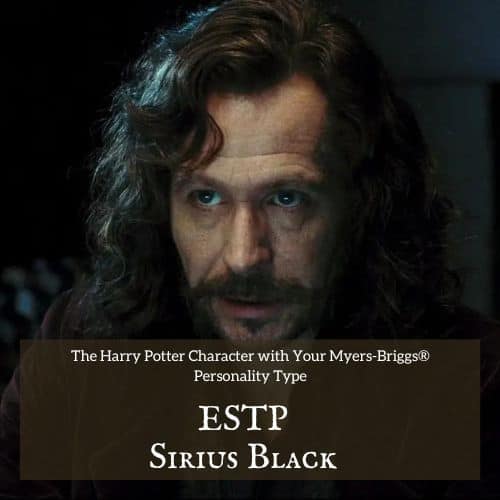
Keeping Sirius inside Grimmauld Place feels like putting a lid on a boiling pot and hoping for the best. He wants to get out, take a risk, and contribute something. Being told that staying home is his contribution does very little to improve his mood.
That need to get up close and personal with life is part of why I profile him as an ESTP. He responds quickly, trusts his ability to handle what happens, and would rather face a danger than spend another evening discussing it.
I love the possibility he represents for Harry: family, freedom, a home beyond the Dursleys. But Sirius also struggles to separate Harry from James, especially when he wants companionship in his own recklessness.
His love is real. So is the damage left by years of imprisonment. He’s trying to become a parent while still grieving the life he never got to live.
Discover more about ESTPs: 10 Reasons Why ESTPs Make Amazing Friends
Severus Snape – INTJ
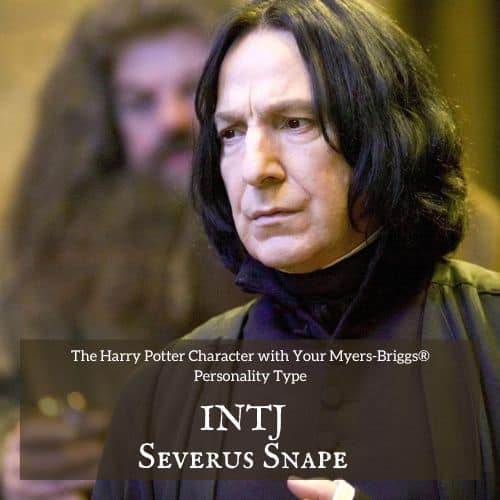
My daughter once asked me to pretend to be Severus Snape while I was homeschooling her because she liked him so much. Of all the teachers at Hogwarts, she chose the one most likely to make a child regret raising their hand. I’m still processing that preference.
Snape is fascinating, though. He keeps his motives concealed, plays a dangerous long game, and gives almost nobody enough information to understand what he’s doing. That combination of strategy, secrecy, and fiercely private feeling is part of why I type him as an INTJ.
His emotions run deep, but they don’t reliably make him kind. His love for Lily shapes enormous decisions, while his resentment spills into his treatment of children who had nothing to do with his suffering. The revelation of his courage doesn’t necessarily erase his meanness. We can recognize what he risked without pretending Neville needed another reason to dread school.
To me, Snape is compelling because those things coexist. He can be brave, intelligent, devoted, bitter, and deeply unfair. I enjoy him as a character. As an actual homeschooling instructor, I would have concerns.
Discover more about INTJs: 10 Things You Should Never Say to an INTJ
Sybill Trelawney – INFP

The wide-eyed professor of Divination is a fairly eccentric version of an INFP. Of course, some might argue that all INFPs are eccentric, but I’ve met several that aren’t so I don’t like to generalize there. Either way, Trelawney is an idealist at heart, deeply connected to her intuition and her inner ideals. Like many INFPs, she’s blessed with the gift of imagination and can rapidly concoct elaborate theories and stories about the future. But beneath that eccentric exterior lies a sensitive soul, easily hurt by her students’ lack of faith in her divination skills and often misunderstood by her peers. When given the chance to prove herself, she is always ready to do so and will defend what she believes in with passion and sincerity. Even though she’s a bit flighty, Trelawney’s predictions have changed the course of Hogwarts history. After all, she was the first person to prophecy how Harry Potter could ultimately defeat Voldemort.
Find out more about INFPs: 24 Signs That You’re an INFP, the Dreamer Personality Type
Gilderoy Lockhart – ESFJ
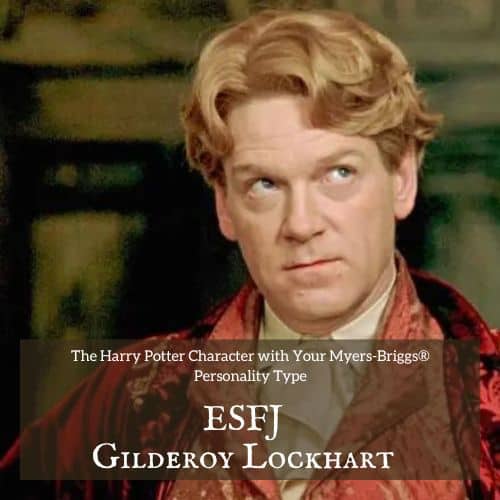
I’m sorry, ESFJs. Believe me. Lockhart is a frustrating example of the ESFJ type – but stay tuned for a better ESFJ character further on this article.
Lockhart showcases some of the worst qualities of unhealthy ESFJs; and, in particular, an ESFJ with a 3 Enneagram type. He fabricates stories to gain social appeal and prestige, and he has no qualms with taking credit for the efforts of others. He has a knack for making himself look valiant and attractive and is charming with everyone he meets. Like most ESFJs, Lockhart knows how to read people and knows what impresses people. He’s aware of social status and what allows people to climb that status ladder. He’s also aware of details and stories from the past, and uses those stories to inspire his own wild tales. But unlike healthy ESFJs, he will do whatever it takes to get ahead – even if it means flat-out lying.
Discover more about ESFJs: 24 Signs That You’re an ESFJ, the Defender Personality Type
Hermione Granger – ESTJ
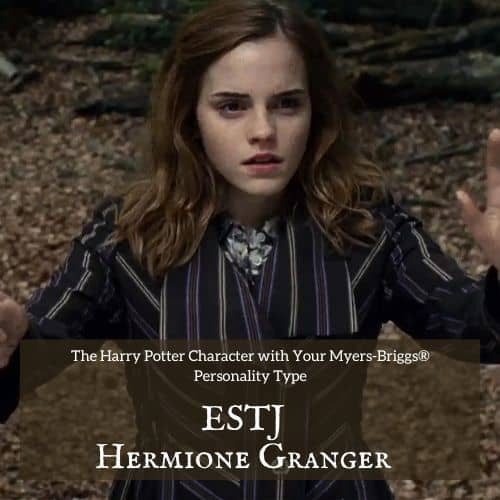
Hermione is my personal favorite. Maybe that’s because I’m a TJ, and there’s something satisfying about watching someone read the instructions before everyone else nearly gets themselves killed. She’s proof that being an ESTJ doesn’t mean you’re just a power-hungry dictator, like the stereotypes would imply. Hermione cares, and she shows that by being ridiculously competent. She prepares, researches, and remembers the information that Harry and Ron didn’t think they’d need. Then, when they need it, she has to save their lives while presumably resisting the urge to say, “We covered this.”
I read her as an ESTJ because she wants knowledge she can put to work. Her Extraverted Thinking pushes her to organize, solve, and get things moving, while her Introverted Sensing gives her a substantial store of learned information to draw from.
But Hermione’s relationship with rules is more interesting than “ESTJs follow them.” She respects rules until they interfere with something she considers more important. Then she becomes resourceful about getting around them.
She can be bossy, impatient, and too certain that her approach is the correct one. I still appreciate that her care usually comes with effort attached. If you’re in trouble, Hermione has probably already started researching how to get you out.
Ron Weasley – ESFP

Ron makes the series feel inhabited by actual teenagers. He gets hungry, complains, makes jokes at questionable moments, and occasionally lets insecurity make decisions that he later regrets. Saving the world apparently doesn’t exempt you from having a bad attitude.
I profile him as an ESFP because he’s responsive to what’s happening around him and often learns through participation. His skill at wizard chess also gives us a useful correction to the idea that an action-oriented person can’t think strategically.
Being Harry’s best friend is complicated. Ron loves him, but living beside someone famous can make your own life feel like a supporting role.
What makes me care about Ron is that he can recognize when he’s failed someone and come back. His courage often involves acting while frightened, embarrassed, or painfully aware that he isn’t the most celebrated person in the room.
Harry Potter – ISFP
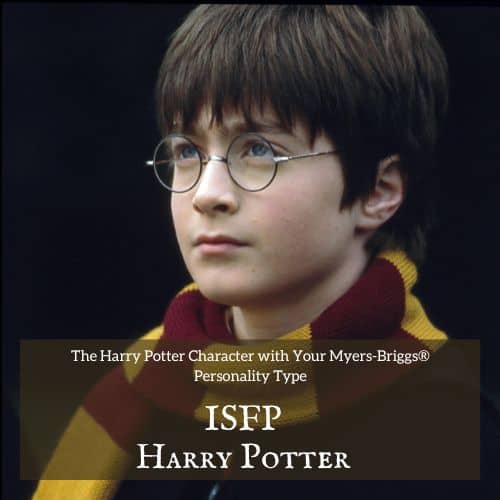
Rubeus Hagrid and Harry Potter show us how two people with the same personality types can show up in completely different ways. Different Enneagram types, different life experiences, and different passions all factor into how a person behaves and is perceived.
Harry Potter is driven by his convictions and values, and he’s not afraid to act rashly if it means he’s standing up for what he believes is right. He’s fiercely loyal to his friends and family, and is willing to risk it all for the greater good. While he keeps a lot of his inner feelings private, his closest friends eventually learn that he’s driven by an intense sense of justice, fairness, and empathy. Like most Feeling-Perceivers, Harry’s emotions are deep and complex but rarely verbalized. He’s not effusive or showy with his feelings; they simmer underneath the surface and show up more in his actions than his words. Like most Perceivers, Potter knows how to act in the moment, take advantage of opportunities, and act quickly when threats are coming his way. He’s also not afraid to call out injustice when he sees it, even if it means standing up to authority.
Luna Lovegood – INTP
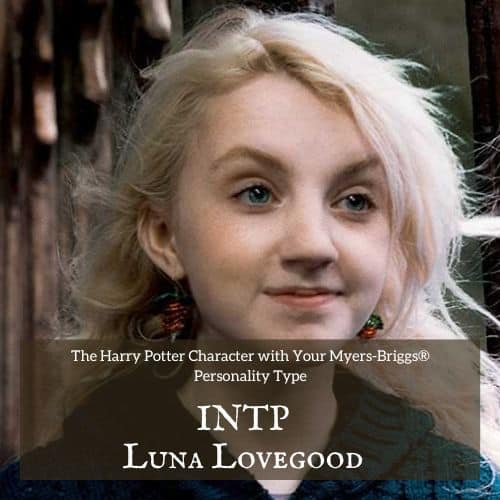
Many people type Luna as an INFP, and that’s fair. However, I find her detached, analytical nature more akin to Introverted Thinking than Introverted Feeling. She has formed her own imaginative interpretation of the world, based on what she thinks is logically possible. When other students harass her for being “weird” she seems unruffled and unperturbed. She’s also a scrupulous thinker, preferring to observe situations before forming her own conclusions about them. Her off-beat humor and imaginative quirks make her appear absent-minded, but she’s actually quite sharp and can break ideas down to all their logical components very easily. When confronted with tough memories from her past, she appears dry, analytical, and detached from her own emotions. This is a far cry from the intense inner passion of the INFP personality type. INFPs are driven by a certain inner conviction that is fiery and intense; although less obvious in an outward emotional sense. Luna Lovegood, in contrast, is curious but detached. She takes the time to explore options before forming any judgments, and appears to move more from the head than the heart.
Find out more about INTPs: 24 Signs That You’re an INTP, the Prodigy Personality Type
Draco Malfoy – ESFJ
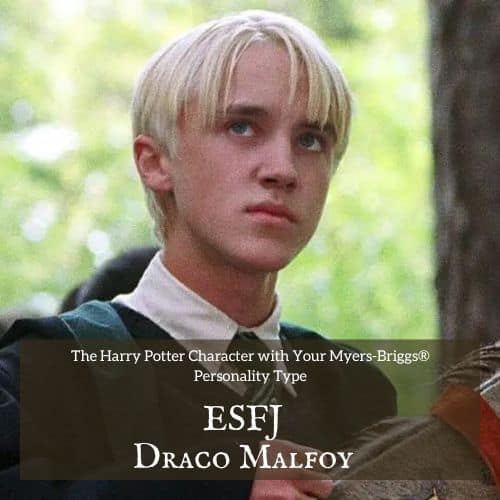
I know everyone was waiting with bated breath to see the notoriously “ENTJ” Draco Malfoy show up on my list. But sadly for the ESFJs, who I actually think are awesome people, they get to claim Draco Malfoy as their own. Don’t worry! There is an actual GOOD ESFJ further into this article. But let’s talk about Draco. Why in the world would this notoriously evil, villainous character be a feeler?!!
Well, that’s where Myers-Briggs stereotypes fall flat. If no personality type is inherently better than another, why are all the villains cast as NTJs? Simple. People see lack of compassion and think “Thinker” when really, compassion has nothing to do with Feeling or Thinking tendencies. At their best, any types can be compassionate. At their best, any types can be logical. We have to look deeper at what really drives a person in their villainy.
So, back to Draco. What does he ultimately care about? What drives all his decisions? He cares about his own reputation, social status, and the approval of those around him. This is all classic unhealthy Extraverted Feeling. Draco defines himself by his relationships. His family name as well as his family traditions are incredibly important to him. While, yes, he’s cruel to Harry and the Weasley’s, he’s deeply loyal to the house of Slytherin, the Malfoy name, and the values he was raised to adopt. With all his faults, Draco is a socially fluent person and can read people quickly. He knows how to be friendly at times, appealing to what he believes will be peoples’ inner feelings and motivations. Yet at other times, he knows just how to twist the knife emotionally. An ENTJ (as Draco is often typed), would have far less insight into the emotional dynamics of others and how to expertly exploit them. They’d be more likely to charge full-steam ahead to their objectives, focusing on tasks and benchmarks rather than emotional manipulation.
Another notable aspect of Draco’s personality is how his feelings are always directed outward. He struggles to know who he actually is at his core. Rather, he adopts the values of those around him – those who have raised him. You see this inner conflict later in the Harry Potter series, as he struggles with the evil tasks he’s been given. It is easy to see that he picks his values based on the traditions he’s grown up with, but struggles to know how he feels as an individual. If Draco Malfoy had grown up in a family that taught him kindness and good values, I believe he could have become an excellent wizard. And many believe there is still hope for Draco at the end of the series.
Neville Longbottom – ISFJ
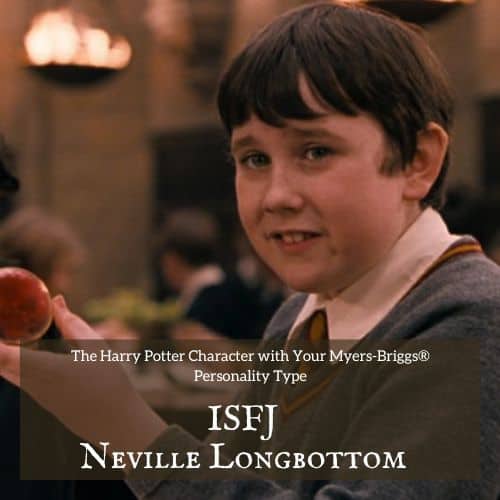
Although Neville is far from the antagonist that Draco Malfoy was in earlier books of the Harry Potter series, he still struggles with inner confidence and courage. He is a loyal and responsible person, which can be seen in his dedication to protecting Hogwarts. He bases his actions around inner feelings revolving around the past, where he experienced deep pain and rejection. Introverted and shy, he finds it hard to assert himself or stand up for his reputation. Yet as he grows and receives the support and confidence of his friends, he evolves into someone with courage and an iron will. Caring and timid, he loves to help others, and becomes one of the most selfless and noble characters in the entire series.
Nymphadora Tonks – ENFP
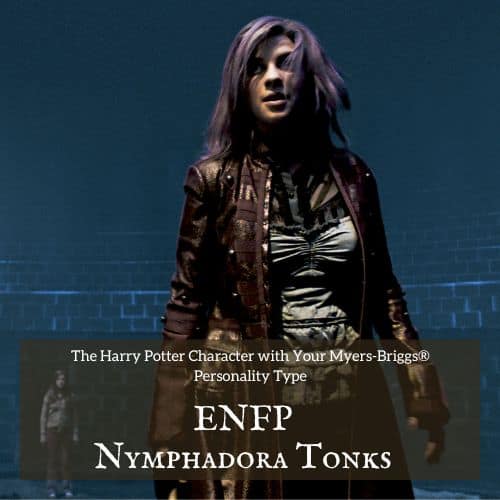
Fiery and impulsive, Tonks is one of the most interesting characters in the Harry Potter universe. Like most ENFPs, she’s not afraid to be herself even if it means not fitting in with the crowd. Though a bit clumsy and unconventional, she has a creativity that helps her to skillfully adapt in the face of danger. With an uncanny sense for the good in people, she formed strong bonds with the other characters, especially with Remus Lupin and Sirius Black. She’s described as being ceaselessly curious, and gifted with a good sense of humor. Tonks also relies on her inner values to guide her; she has a deep belief that those who have the power should do what is right and just.
Ginny Weasley – ESTP
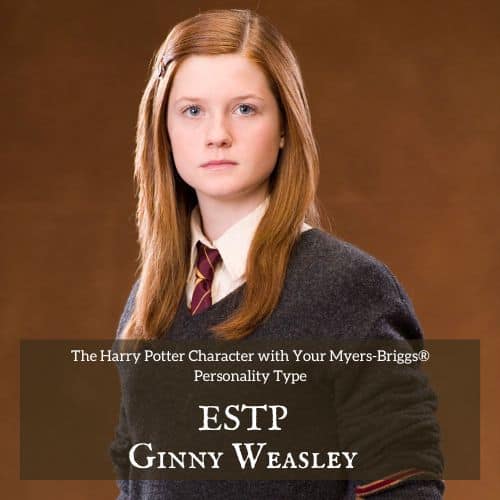
Movie Ginny Weasley is a rather toned-down version of book Ginny Weasley. For this typing, we’re going to rely more on the books than the movies. Ginny is a natural risk-taker and doesn’t think twice about taking on difficult situations. She’s got the courage to face down danger, no matter how daunting it may be. She’s also a master at reading people and situations, shifting between emotions and strategies to fit whatever situation she finds herself in. Despite being the youngest in a large family, she knew how to stand up for herself and use resourcefulness to make things happen. ESTPs are action-oriented, rational, and strong-willed – all of which can be seen in Ginny Weasley.
Lily Potter – ENFJ
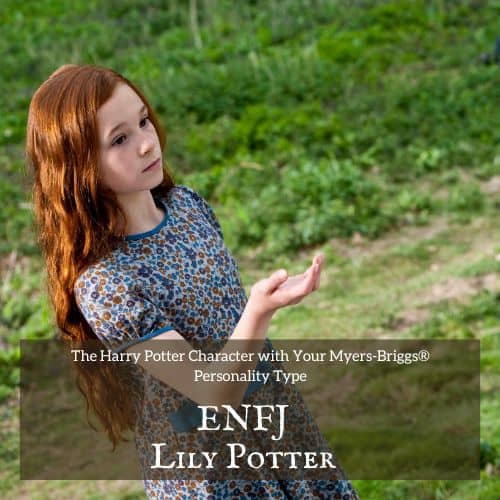
Lily Potter is one of the most unsung heroes in the Harry Potter universe. She’s courageous, passionate, and full of life; she is willing to put her own safety on the line for those she loves. Not only does she have bravery and determination, but also an uncanny ability to read people. This is why she was able to empathize with Severus Snape even when others could not. Her maturity, vision, and hope for individuals and the world is what made her so powerful.
James Potter – ESTP
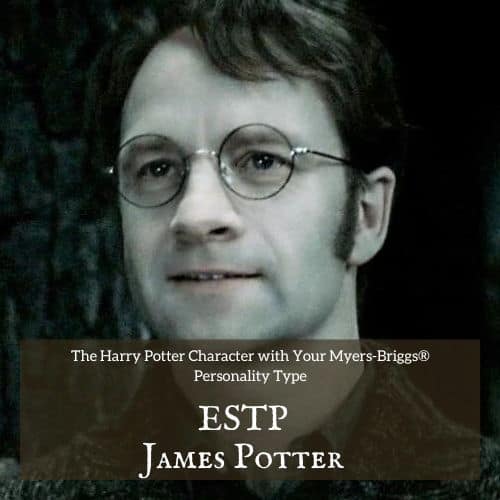
Although James was a bit of an arrogant bully as a youth, he eventually grew into a brave, loyal and loving father. Mischievous and impulsive in childhood, he got a kick out of bullying people like Severus Snape. Lily, his future wife, initially took a strong disliking to James, labeling him an “arrogant, bullying toerag.” Like most ESTPs, James Potter was extremely observant, witty, and good at adapting to any situation. He wanted to have a good time more than he wanted to buckle down and focus on his studies. He also showed some of the trademark tertiary Extraverted Feeling of the ESTP; in a negative way when he tried to get reactions out of people by teasing or bullying. And positively, when he grew and matured, becoming more considerate, supportive, and affirming.
Fred and George Weasley – ENTP
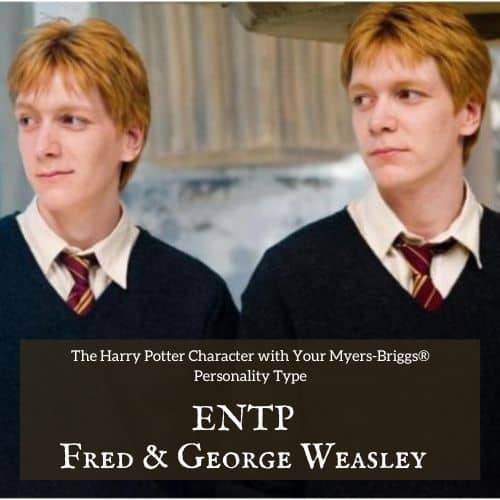
Whenever I’m dealing with someone particularly annoying, part of me wants Fred and George to arrive with fireworks and a dragon. I recognize that this would create additional problems. For a few glorious minutes, I would be willing to accept them.
The twins make a strong case for ENTP because their mischief involves so much invention. They spot possibilities in ordinary objects, test ideas, and figure out how to make something work that probably shouldn’t. There’s considerable thought behind the chaos.
Their Extraverted Intuition shows up in that constant experimentation. Their Introverted Thinking helps them work out the mechanics. Hogwarts gets the disruption; their eventual customers get the finished product. Under Umbridge, making people laugh becomes a way to challenge someone who expects fear and obedience. She can write another decree. They can give the school something much more memorable.
I love that they take their ideas seriously without feeling obligated to take every authority figure seriously. Some people have earned respect. Others have earned a fireworks display.
Bill Weasley – ISTP
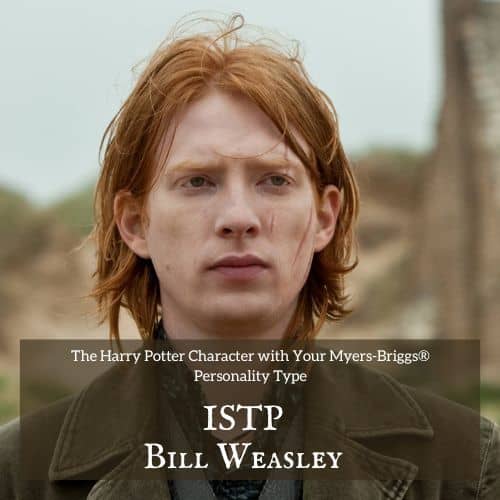
Described by his father as hard-working and down-to-earth and by his younger classmates as “cool” and laid-back, Bill Weasley embodies some of the best qualities of the ISTP. He embraced adventure, often seeking out new and exciting places to explore and taking pleasure in novelty and excitement. Bill was also very analytical and experienced, performing well in school and using his powers of arithmancy to decode numbers and break curses. This analytical ability to dig into codes and puzzles is a common skill for Introverted Thinking types, such as ISTPs and INTPs. And like all Sensing-Perceiving personality types, Bill is straightforward, fun-loving, and realistic.
Molly Weasley – ESFJ
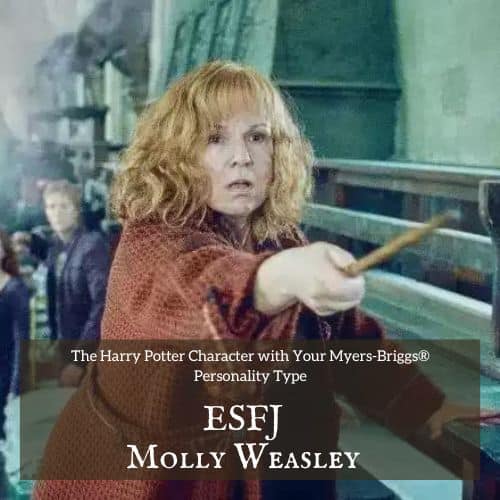
Molly can feed you, fuss over you, and make you feel thoroughly told off within the same conversation. The affection is unmistakable. So is her opinion of whatever foolish thing you’ve been doing.
Her ESFJ side shows in the way she creates belonging through everyday care. Meals, knitted sweaters, family routines, and remembering who needs looking after all matter. Harry receives a place in her family through repeated, tangible gestures.
I especially appreciate that her love isn’t reserved for children who make life easy. That would eliminate a substantial portion of the Weasley household. Sure, her protectiveness can become overbearing, particularly when the children want more independence than she feels ready to give them. But beneath it is a very understandable fear of losing someone. When danger arrives, she’s willing to face it herself boldly.
Percy Weasley – ISTJ
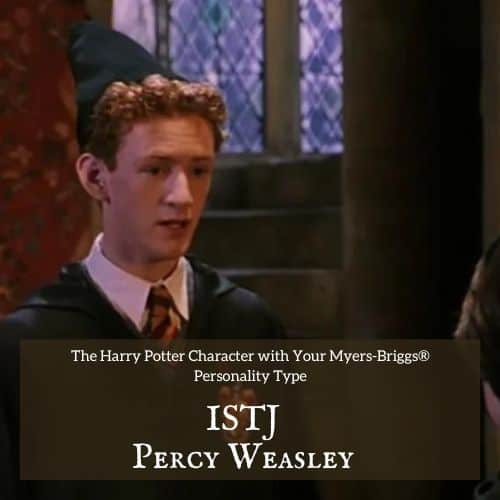
Percy makes me want to ask whether the Ministry has ever thanked him enough to justify the amount of personality he’s invested in it.
I profile him as an ISTJ because he takes work, procedure, and institutional responsibility seriously. He wants to earn his position and be recognized as capable. Those are reasonable desires. The trouble comes when he gives an institution more credibility than its conduct deserves.
His conflict with his family shows how ambition and certainty can narrow someone’s judgment. He works hard, but hard work doesn’t guarantee that you’re serving something worthwhile.
That’s why his return is so meaningful. Admitting he was wrong costs him pride, and he does it anyway. I find that more admirable than his professional achievements. Being responsible eventually has to include taking responsibility for your own mistakes.
Arthur Weasley – INTP
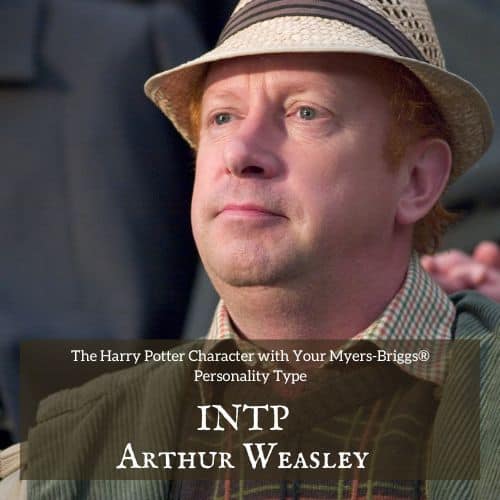
Arthur lives in a world with dragons and moving photographs, yet a Muggle appliance can make his day. I love that about him. He hasn’t allowed familiarity with magic to exhaust his ability to be interested in things.
I read him as an INTP because he wants to understand how things work, including things his own society considers beneath its attention. His curiosity sends him tinkering, experimenting, and asking questions that other wizards don’t think to ask. He doesn’t need every interest to improve his status or become a profitable venture. Sometimes knowing is enough.
I also appreciate his refusal to accept that someone’s background determines their worth. His curiosity opens the door to respect: Muggles are people with ingenuity and lives worth understanding. He would probably love a hardware store. Someone should budget several hours.
Oliver Wood – ENTJ
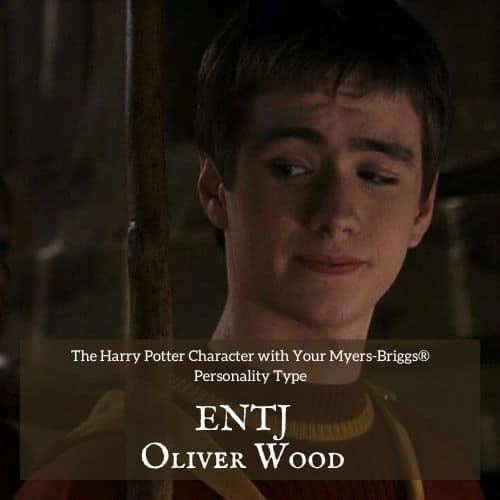
I’m so glad that there’s an ENTJ in the Harry Potter series who isn’t simply a villain. Aren’t we all tired of the ENTJ villain trope? In Oliver Wood we get a glimpse of a normal, healthy ENTJ in the wild. Oliver was decisive and assertive – always looking to take charge of a situation. He also had big plans, often with the goal of making his team better than ever before. His ambition, drive, and willingness to make tough decisions were all classic ENTJ traits. He pushed boundaries, challenged the status quo, and worked hard to make sure everyone was held accountable. He was a great leader, but unlike an ESTJ, was less strict about rules and traditions. Instead, he focused on strategy, mapping out long-term goals, and bending rules he deemed unnecessary.
Dobby – INFP
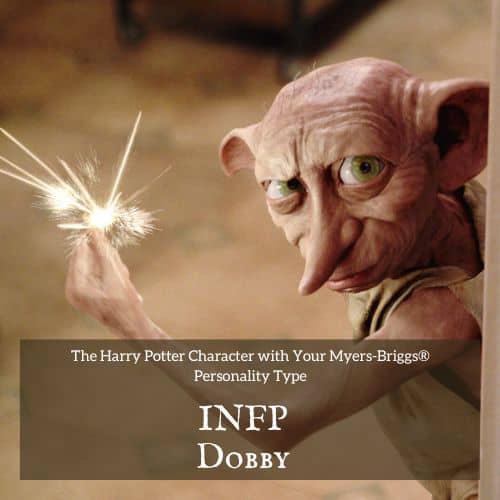
Dobby has a strong moral compass and some deeply questionable methods. He wants to protect Harry. Harry would appreciate being consulted before the protection involves injuries or serious trouble.
I profile Dobby as an INFP because his convictions eventually outweigh the obedience expected of him. He recognizes that something is wrong and acts on that knowledge, even when he’s terrified and conditioned to punish himself for doing so. INFPs are like that. They can’t go against their inner code for long; they have to stand up for what they personally believe is right.
His longing for freedom is especially moving because it includes the right to want things for himself. Wages. Clothes. A life he has some say in. Freedom gives him the chance to choose his generosity. His loyalty to Harry becomes something he offers willingly, which makes it far more meaningful than service extracted through fear.
Lord Voldemort – ENTJ
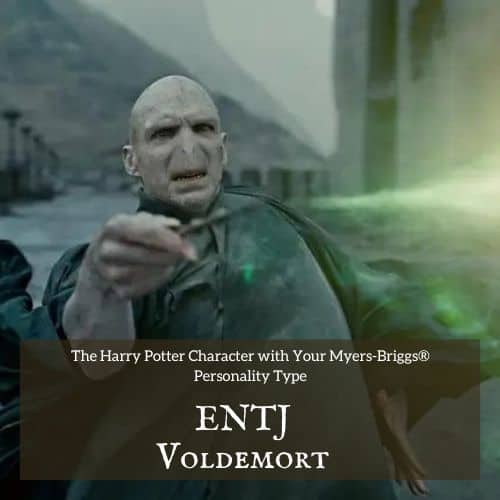
Sorry, ENTJs. Unfortunately, there is one villain who does, in fact, have your personality type. Voldemort was a classic unhealthy ENTJ; although “unhealthy” hardly does it justice. He was likely a sociopath on top of being an unhealthy ENTJ. He was utterly ruthless and ambitious, willing to do whatever it took in order to achieve his goals – no matter how many people he had to hurt in the process. He was also incredibly organized and strategic, able to move his pawns around like a master chess player. He was, of course, incredibly powerful in the dark arts, though he often relied on his strategies and cunning to get out of tight spots. All in all, Voldemort is a perfect example of why it’s important for ENTJs to stay balanced and grounded (and not be sociopaths or dwell in dark magic).
What Do You Think?
Did you enjoy this article? What are your favorite Harry Potter characters, and do you see some of yourself in them? Let us and other readers know in the comments!
Find out more about your personality type in our eBooks, Discovering You: Unlocking the Power of Personality Type, The INFJ – Understanding the Mystic, The INTJ – Understanding the Strategist, and The INFP – Understanding the Dreamer. You can also connect with me via Facebook, Instagram, or Twitter!